

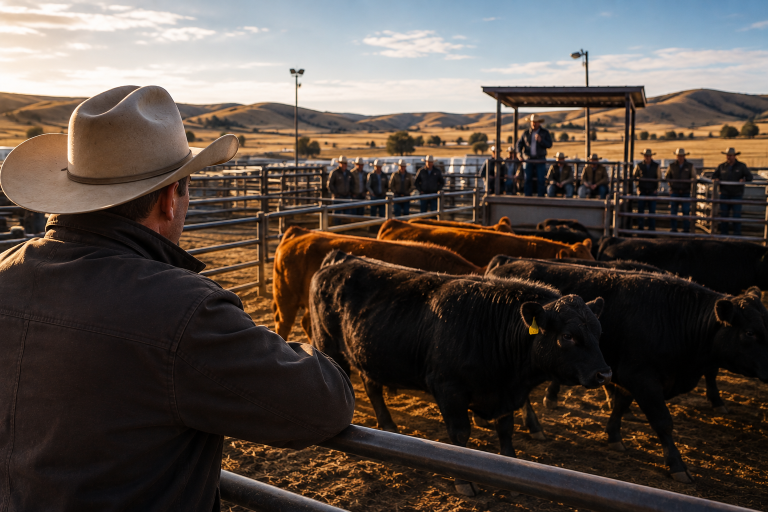
Cattle auctions across South Dakota move fast, and walking into one without preparation can cost you money on animals that don’t fit your operation. Whether you’re bidding at a sale barn in Presho, Winner, or right here in the White River region near Hamill, understanding how these auctions work will help you leave with cattle that actually pay off.
Why South Dakota Auctions Are Different?
South Dakota’s wide-open range country produces some of the hardiest, best-adapted cattle in the country, and that reputation shows up on the auction floor. Buyers travel from Nebraska, Wyoming, and beyond specifically because South Dakota cattle are raised on tough native grass, tested by harsh winters, and bred for real working conditions rather than show-ring looks. That means competition can be steep, and the good pens often sell quickly, so knowing what you’re looking for before the gavel drops matters more here than at a smaller regional sale.
Research the Sale Barn and Consignors First?
Not every auction house runs the same way, and not every consignor sells cattle with the same standards. Before you show up, find out who is consigning cattle to that particular sale and whether their herds have a track record for health, genetics, and consistency, especially if you’re shopping for bred heifers. A little homework here saves a lot of regret later.
- Call the sale barn ahead of time and ask for a sale order or consignor list
- Look up whether consignors vaccinate, wean, and precondition calves before sale day
- Ask about herd health records, especially for bred heifers or breeding stock
- Check if cattle are sold with a health guarantee or “as-is”
Know What You’re Actually Buying
Auction listings can be short on detail, so it pays to arrive early and physically look over the pens before bidding starts. Pay attention to frame size, body condition, temperament, and any visible signs of illness or injury, since these details rarely come through clearly from the auction ring seats. If you’re buying cattle for breeding purposes, ask specifically about age, calving history, and whether heifers are guaranteed bred, since this single question can prevent a costly surprise months down the road.
Set a Budget and Stick to It
Auction energy can push even experienced buyers into overspending, especially when a nice pen of calves draws a bidding war. Decide your top price per head before the sale starts, factor in trucking and any post-sale vet costs, and treat that number as final — understanding the real cost of owning cattle beyond just the purchase price will keep your budget realistic.
| Cost Factor | What to Consider |
|---|---|
| Purchase price per head | Set a hard ceiling before bidding |
| Trucking/hauling | Distance from sale barn to your ranch |
| Health protocols | Vaccinations, dewormers, mineral program |
| Facility readiness | Quarantine pen, fencing, water access |
Understand Weight, Shrink, and Pricing Terms
Cattle sold by weight can carry pencil shrink or scale shrink deductions, and not understanding these terms before you bid can shift your real cost per pound significantly. Ask the sale barn how shrink is calculated for that particular auction, and factor it into your final bid price rather than being surprised at settlement.
Buying Cattle at a South Dakota Auction: Timing Matters
Seasonal timing affects both price and quality when buying cattle at a South Dakota auction. Fall run sales tend to have the highest volume of calves but also the most competition, while late winter and early spring sales often carry more bred females and replacement heifers. Matching your purchase timing to your operation’s calving schedule and grass availability keeps your herd cycle on track.
Transport and Herd Integration
Getting cattle home safely is only half the job; integrating them into your existing herd without spreading illness or stress is the other half. New arrivals should be quarantined separately for at least two weeks, monitored for signs of respiratory illness, and gradually introduced to your feed and mineral program rather than switched over abruptly.
Frequently Asked Questions:
1. What should I bring to a South Dakota cattle auction?
Bring your buyer’s number or registration, a way to pay (many barns require same-day settlement), and a notepad to track lot numbers and prices as you bid.
2. How do I know if bred heifers are actually guaranteed bred?
Ask the consignor or sale barn directly whether a bred guarantee is included, and get any guarantee terms in writing before you bid.
3. What’s a normal shrink percentage at auction?
Shrink varies by sale barn and distance traveled, but many auctions use a standard pencil shrink between 2-4% unless otherwise stated in the sale terms.
4. Is it better to buy calves in fall or bred females in spring?
It depends on your operation’s goals; fall typically offers more calf volume and competitive pricing, while spring sales often have stronger selection of bred replacement females.
5. How long should new cattle be quarantined before joining my herd?
Most experienced ranchers recommend a minimum of two weeks of separate quarantine to watch for illness before full integration.
6. Can I buy cattle directly from Larson Ranch instead of an auction?
Yes, Larson Ranch LLC sells cattle directly, giving buyers full visibility into genetics, health history, and management practices without the uncertainty of an open auction.
Working with a Trusted South Dakota Ranch
Buying directly from an established, reputable operation can take much of the guesswork out of the auction process altogether. Larson Ranch LLC has raised cattle in the White River Hills region near Hamill, South Dakota for five generations, and our cattle catalog reflects animals bred and managed for the same rugged conditions many buyers are trying to prepare for. If you’re new to buying cattle, our guide for first-time ranch buyers can help, and our team can walk you through current availability and answer any questions about herd health or breeding history.
Contact Us
Phone: 605-842-0260