

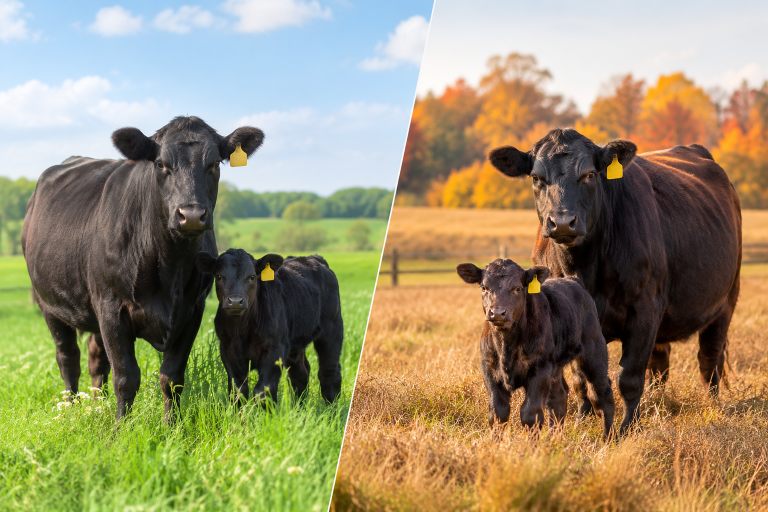
Choosing between spring-calving and fall-calving bred heifers is one of the most important decisions a cattle producer makes. The calving window you pick shapes your feed costs, labor demands, weaning weights, and cash flow for years. For ranchers across South Dakota, where winters are long and the grass season is short, timing matters even more. Understanding how each system works helps you build a herd that fits your land, your budget, and your goals.
Why Calving Season Matters for South Dakota Ranchers?
Calving season controls when your cows have their highest nutritional needs, when labor peaks, and when calves hit the market. Stockmen in the Northern Plains deal with sharp temperature swings, late blizzards, and unpredictable spring moisture. A calving window that works well in Texas can be a poor match for the White River region, where weather can turn quickly.
Matching calving season to your forage calendar is the most reliable way to keep costs in check. Many first-time buyers overlook this step and end up paying for extra hay, shelter, and labor they did not plan for.
Understanding Spring-Calving Bred Heifers:
Spring-calving heifers are bred in early summer and deliver calves from late February through May. This is the most common system in South Dakota because it lines up with the natural growth of native grass.
Advantages of Spring Calving
Calves hit the ground just as pastures begin to green up, so lactating cows can meet their higher energy needs from grazing instead of purchased feed. Warmer days also reduce the risk of calf scours and pneumonia compared with deep winter births.
- Lower winter feed costs because peak nutrition needs match spring grass
- Better pasture utilization during lactation
- Familiar management with plenty of local advice and veterinary experience
- Strong demand for spring-born calves at traditional fall sales
Challenges of Spring Calving
Early-season calving still carries weather risk. A late snowstorm in March or April can mean extra labor, calf shelters, and sleepless nights. Calves born in spring are also weaned in the fall, when the market is often crowded with similar cattle, which can soften prices.
Understanding Fall-Calving Bred Heifers:
Fall-calving heifers are bred in winter and calve from late August through November. This approach is less common in the Northern Plains but has loyal followers among producers who want to spread out their workload and capture different market windows.
Advantages of Fall Calving
Fall-born calves benefit from mild weather and clean ground at birth. Cows are also in better body condition at calving because they have just come off summer grass. Calves are heavier at weaning in the spring and can often be marketed when fewer calves are available.
- Milder weather at calving reduces labor stress and calf losses
- Heavier weaned calves in the spring
- Less competition at sale time, which can improve pricing
- Cows rebreed during the winter, when many ranches have more time available
Challenges of Fall Calving
Lactating cows need high-quality feed through the winter, which raises hay and supplement costs. Breeding during cold months also requires careful attention to body condition and nutrition. If your operation relies heavily on native range, this system can strain your resources.
Spring vs. Fall Calving: Side-by-Side Comparison
| Factor | Spring-Calving | Fall-Calving |
|---|---|---|
| Typical calving window | Late February to May | Late August to November |
| Peak feed demand | Matches spring grass growth | Falls during winter months |
| Winter feed costs | Lower | Higher |
| Weather risk at calving | Moderate (late storms) | Low |
| Weaning timing | Fall | Spring |
| Market window | Crowded fall market | Less crowded spring market |
| Best for | Grass-based operations | Operations with stored feed |
Key Factors to Consider Before You Decide
No single system wins for every ranch. The right answer depends on your resources, goals, and tolerance for risk.
1. Forage and Feed Availability
Look closely at your pasture quality, hay production, and winter feeding capacity. Spring calving typically fits ranches that rely on native grass. Fall calving works better when you have reliable stored feed or access to crop residue.
2. Labor and Facilities
Think about when your family or crew has the most time. If spring is already busy with planting, branding, and fieldwork, a fall calving window may spread the work more evenly. Good calving pens and windbreaks help in either system.
3. Market Goals
Consider where and when you plan to sell. Some producers prefer the predictability of traditional fall sales, while others chase premiums in less crowded seasons. If you plan to buy or sell through sale barns, our breakdown of South Dakota cattle auctions and how they work can help you plan.
4. Genetics and Herd Goals
Calving ease, birth weight, and maternal traits matter in either system. Selecting the right sire is just as important as selecting the right female.
Cost and Management Comparison
| Cost Area | Spring-Calving | Fall-Calving |
|---|---|---|
| Winter hay and supplement | Lower | Higher |
| Calving labor | Higher during storms | Lower in mild weather |
| Calf health costs | Moderate | Often lower at birth |
| Breeding season management | Summer | Winter |
| Cash flow timing | Fall | Spring |
Matching Heifer Type to Your Operation
Heifers that are guaranteed bred give you certainty about when calves will arrive, which is critical for planning either system. Understanding the difference between bred and open females also helps you avoid surprises.
Proper selection also improves long-term herd performance, since strong replacement females carry your genetics forward for years.
Why Buy Bred Heifers from a South Dakota Ranch?
Locally raised heifers are acclimated to Northern Plains weather, forage, and altitude. They adapt faster and tend to perform better than cattle shipped in from milder regions. Buying from an established ranch also lets you see the herd, ask about breeding dates, and understand health and vaccination history.
If you are new to the process, our article on buying cattle in South Dakota for first-time ranch buyers walks through the basics. You can also explore the current cattle catalog to see what is available.
Frequently Asked Questions
Q1. Which calving season is better for South Dakota ranches?
Spring calving is more common because it lines up with native grass growth and lowers winter feed costs. Fall calving can work well for ranches with strong stored-feed supplies and a desire to hit different market windows.
Q2. Are fall-calving heifers more expensive to manage?
Often, yes. Lactating cows need more energy during winter, which increases hay and supplement costs. However, lower calving losses and heavier spring weaning weights can offset some of that expense.
Q3. When are spring-calving bred heifers usually bred?
Most are bred in early summer and calve between late February and May the following year, depending on the breeding date and management plan.
Q4. Can I switch from spring to fall calving later?
Yes, but it takes planning. You will need to adjust breeding dates and nutrition, and the transition often takes a couple of breeding seasons to complete.
Q5. How do I know my heifers are truly bred?
Ask for pregnancy confirmation by a veterinarian, along with expected calving dates. Reputable ranches provide this information up front.
Q6. Do calving ease genetics matter for both systems?
Absolutely. Heifers calving for the first time benefit from low-birth-weight sires whether they calve in spring or fall.
Final Thoughts
Both systems can be profitable when matched to the right ranch. Spring calving suits grass-based operations that want lower feed costs, while fall calving rewards producers with strong feed resources and a desire for different market timing. Take an honest look at your pasture, labor, and goals, then choose the system that supports them. Whichever path you take, starting with healthy, well-bred spring-calving bred heifers or fall-calving females from a trusted South Dakota source gives your herd a strong foundation.
Contact Us
Ready to find the right bred heifers for your operation? Reach out to the team at Larson Ranch LLC to talk through your goals and see what is available.
Contact Info
- Phone: 605-842-0260
- Business: Larson Ranch LLC
- Website: larsonranchllc.com
- Contact Us