

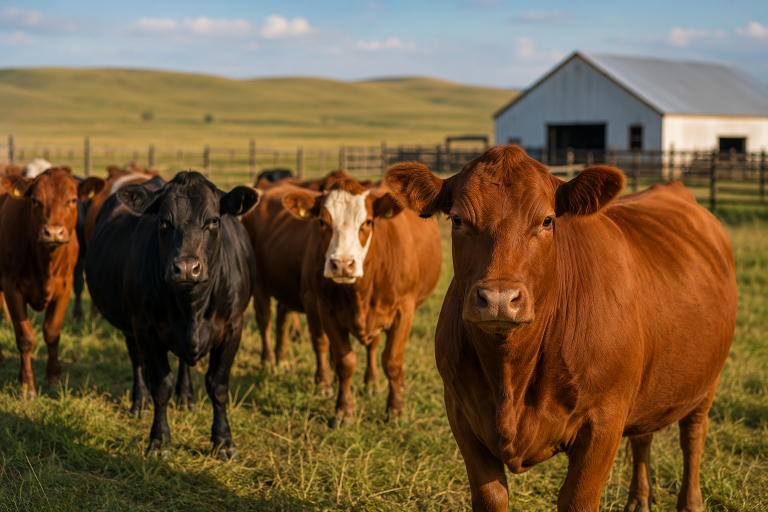
South Dakota’s cattle producers know that buying bred heifers is one of the biggest investments a growing operation can make, and the term “guaranteed bred” gets used loosely across sale barns and private treaty listings throughout the state. For ranchers in Hamill, Chamberlain, Winner, and the broader White River region, understanding exactly what that guarantee covers can mean the difference between a smooth calving season and a costly surprise. This guide breaks down what sellers actually mean when they advertise bred heifers for sale in South Dakota, what documentation should back up the claim, and what questions buyers should ask before signing a bill of sale.
What “Guaranteed Bred” Is Supposed to Mean?
A true “guaranteed bred” claim means the seller has confirmed pregnancy through a veterinarian, either by rectal palpation, ultrasound, or blood test, and stands behind that diagnosis with a written guarantee. In South Dakota, most reputable sellers will re-check or replace an open heifer within a set window after delivery, typically 30 to 60 days, though the exact terms vary by seller and should always be spelled out in writing before money changes hands.
Why the Guarantee Matters More in South Dakota’s Climate?
South-central South Dakota’s calving season runs against a backdrop of unpredictable spring weather, tight grazing windows, and long distances between ranches and veterinary clinics, so an open heifer discovered too late can throw off an entire year’s breeding and feeding plan. Ranchers along the White River and in surrounding Tripp, Lyman, and Gregory counties often plan calving to align with green-up on native pasture, and a heifer that turns out open disrupts that timeline in a way that’s harder to absorb than it would be in a milder or more resource-dense region.
What Documentation Should Come With the Purchase?
Buyers evaluating bred heifers should expect more than a verbal assurance from the seller.
- A veterinary pregnancy confirmation with the date of the exam and method used (palpation, ultrasound, or blood test)
- An estimated calving window based on breeding or exposure dates
- Breeding method disclosed, whether AI, natural service, or a combination, along with sire information when available
- Health records including vaccination history and any treatments administered
- A written guarantee period with clear terms for what happens if a heifer proves open
Comparing Guarantee Terms Across Common Sale Types:
| Sale Type | Typical Guarantee Window | Verification Method |
|---|---|---|
| Production/private treaty sale | 30–60 days after delivery | Vet-confirmed prior to sale, often re-checkable |
| Sale barn/auction lot | Varies, often “as represented” only | May rely on seller’s word unless independently verified |
| Registered breeder programs | 60 days or full-term guarantee | Vet-confirmed with documented breeding dates |
Questions Buyers Should Ask Before Purchasing:
A short conversation with the seller before purchase can prevent a lot of frustration later in the year. Buyers should ask when and how the pregnancy was confirmed, whether the vet who performed the check is available for a second opinion, what the expected calving window looks like, and what recourse exists if the heifer doesn’t calve. It’s also worth asking whether the guarantee transfers if the heifer is resold or moved to a new operation before calving, since terms don’t always carry over automatically.
Evaluating Bred Heifers Beyond the Pregnancy Guarantee:
Pregnancy status is only part of the picture when sourcing bred heifers for sale in South Dakota, since frame size, disposition, and udder conformation all affect how well a heifer performs once she’s calving and raising her first calf on native or improved pasture. Buyers should look for heifers with moderate frame scores suited to South Dakota’s forage conditions, sound feet and legs for covering rough or hilly ground, and a calm temperament that makes handling easier during calving checks. Sellers who can speak knowledgeably about a heifer’s dam’s production history and the sire’s calving-ease EPDs are generally offering more transparency than those who can’t.
Timing Your Purchase Around South Dakota’s Calving Season
Most South Dakota producers aim for heifers to calve ahead of the main cow herd, giving first-calvers extra attention during a less hectic stretch and additional recovery time before rebreeding. That typically means shopping for bred heifers in late summer through fall for a spring calving start, or in late winter for operations running a summer/fall calving system tied to native grass growth. Buying with enough lead time also gives producers a window to have an independent vet re-confirm pregnancy status before the guarantee period closes.
Frequently Asked Questions
Q1. What does “guaranteed bred” mean when buying heifers in South Dakota?
It means the seller has had a veterinarian confirm pregnancy and offers a written guarantee, usually with a replacement or refund option if the heifer turns out open within a specified window.
Q2. How is pregnancy typically confirmed before a sale?
Most South Dakota sellers use rectal palpation or ultrasound performed by a licensed veterinarian, with ultrasound also providing an estimated calving date.
Q3. Can I have an independent vet re-check a bred heifer before finalizing the purchase?
Reputable sellers generally allow this, and buyers should confirm it’s permitted before agreeing to terms, especially for higher-value purchases.
Q4. What happens if a heifer I bought as bred turns out to be open?
This depends entirely on the guarantee terms agreed upon at sale; most include a defined window for replacement or refund, so it’s important to get this in writing.
Q5. Does the breeding method affect the guarantee?
It can. AI-bred heifers with documented service dates often come with more precise calving windows than heifers bred by natural service, where dates may be estimated over a longer exposure period.
Q6. When is the best time to buy bred heifers for a spring calving herd in South Dakota?
Late summer through fall purchases generally give producers enough lead time to plan pasture, monitor the heifers, and arrange a re-check before calving begins.
Final Thoughts
Buying bred heifers for sale in South Dakota comes down to trust, documentation, and asking the right questions before the sale is final, since a guarantee is only as good as the paperwork and communication behind it. Producers who take the time to verify pregnancy status, review health records, and understand the seller’s replacement terms are far better positioned heading into calving season on South Dakota’s plains.
Have questions about available bred heifers or want to talk through what fits your herd goals? Call us at 605-842-0260 to speak with our team directly.