

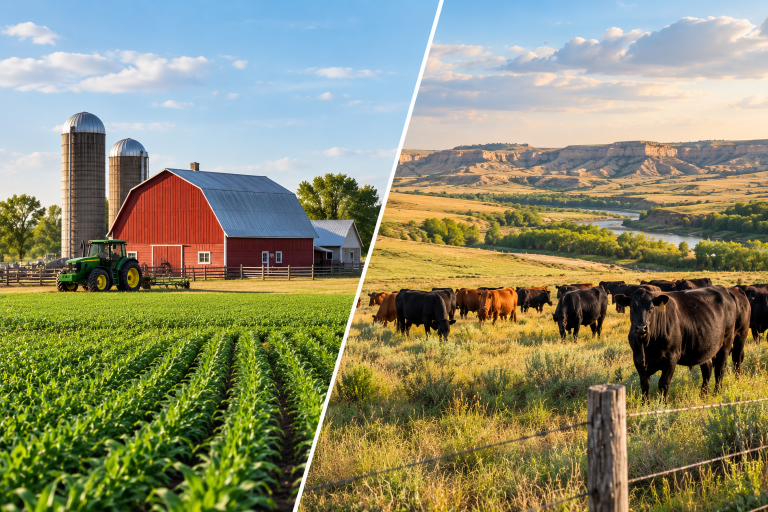
Buying land in South Dakota means choosing a way of life as much as a piece of property. The state’s rolling prairie, river bottoms, and wide-open pastures attract buyers from across the country, and many of them start with one basic question about the difference between a farm and a ranch. The answer shapes your budget, your daily routine, your equipment needs, and the kind of income you can expect. At Larson Ranch LLC, we have spent generations working this land in the White River region, and we want buyers to make confident, informed decisions before they sign anything.
What Is the Main Difference Between a Farm and a Ranch?
A farm is land used mainly to grow crops, such as corn, soybeans, wheat, sunflowers, and hay. A ranch is land used mainly to raise livestock, usually cattle and horses, on large areas of grazing ground. In South Dakota the two often overlap, and plenty of operations run cattle while also growing feed. Still, the core purpose of the land is what separates them.
Understanding this distinction matters because it drives everything that follows: land cost per acre, fencing and water needs, labor, and how you generate revenue. A buyer who wants steady crop rotations will look at very different property than one who wants a cow-calf herd. If you are weighing a farm vs. ranch in South Dakota, start by deciding which activity you want to spend most of your time on.
Land Use and Terrain in South Dakota
South Dakota offers a wide range of landscapes, and the terrain often decides whether a property suits crops or cattle.
1. Farmland Characteristics
Farmland tends to be flat to gently rolling, with deeper, more fertile soil and reliable access to rainfall or irrigation. Eastern South Dakota is known for its productive cropland, where field size, drainage, and soil quality are the biggest value drivers.
2. Ranchland Characteristics
Ranchland is typically rougher, with native grass, hills, draws, and creek bottoms that are better suited to grazing than plowing. Central and western South Dakota, including the White River hills, offer the kind of native rangeland that supports healthy herds.
Farm vs. Ranch: Side-by-Side Comparison
| Factor | Farm | Ranch |
|---|---|---|
| Primary purpose | Growing crops | Raising livestock |
| Typical terrain | Flat to gently rolling | Rolling hills, native grass |
| Income source | Crop sales | Cattle, calves, horses |
| Key infrastructure | Machinery, grain storage, drainage | Fencing, water systems, corrals, barns |
| Seasonal workload | Planting and harvest peaks | Calving, grazing rotation, year-round care |
| Main risk factors | Weather, commodity prices | Drought, feed costs, cattle markets |
Costs Buyers Should Expect
Price per acre is only part of the picture. Cropland usually costs more per acre than grazing land, but ranches often need more total acres to support a herd. Beyond the purchase price, buyers should plan for property taxes, equipment, fencing repairs, water development, and livestock purchases.
Ranch buyers in particular should look past the listing price. Hidden expenses such as hay, mineral supplements, veterinary care, and winter feeding can add up fast. For a closer look at the numbers, see the real cost of owning cattle ranches in South Dakota.
Livestock and Herd Considerations
If a ranch is your goal, your cattle program matters as much as the land. Herd genetics, health, and breeding decisions directly affect your return. Many first-time buyers begin by learning the basics in buying cattle in South Dakota: tips for first-time ranch buyers.
Choosing the right animals is a major step. Here is what to focus on:
- Breeding status: Understand bred heifers vs. open heifers and how each fits your timeline.
- Guarantees: Know what guaranteed bred actually means before you buy.
- Sire selection: Learn how to pick the right sire at bull sales in South Dakota.
- Herd performance: See how proper cattle selection can improve herd performance.
You can browse available animals anytime in our cattle catalog.
Income Potential and Lifestyle
Farm income depends heavily on yields and commodity prices, with the busiest stretches at planting and harvest. Ranch income comes from selling calves, breeding stock, and sometimes horses, with work spread across the whole year through calving, grazing management, and herd health.
Lifestyle differs too. Farming often feels like a cycle of intense seasons, while ranching is a steady daily commitment to animals. Many South Dakota ranch owners also add income through recreation, including guided and private hunting.
Why the White River Region Appeals to Buyers
The White River region draws both agricultural buyers and outdoor enthusiasts. Native grass, clean water sources, and strong wildlife populations make it a practical choice for a working ranch and a rewarding place to own land.
How to Decide: Farm or Ranch?
Before you buy, ask yourself a few direct questions:
- Do I want to grow crops, raise livestock, or do both?
- How many acres do I need to support my goals?
- What is my realistic budget for land, equipment, and animals?
- Do I want recreation income, such as hunting, to be part of the plan?
- How much time can I commit each day and each season?
Your answers will point you toward the right property type. Visiting the land in person is always the best next step, and you can find us on our location page or learn more about Larson Ranch.
Frequently Asked Questions
1. Is a ranch more expensive than a farm in South Dakota?
Cropland generally costs more per acre, but ranches usually require more acres and added expenses like fencing, water systems, and livestock. Total cost depends on size, location, and improvements.
2. Can I run cattle on a farm?
Yes. Many South Dakota operations combine crops and cattle, using crop residue and grown feed to support the herd.
3. Which is better for first-time buyers?
It depends on your goals and experience. Ranching has a learning curve around animal care, while farming requires equipment and crop knowledge. Starting with a small herd is a common entry point.
4. How many acres do I need for a cattle ranch?
Carrying capacity varies by grass quality and rainfall. In western South Dakota, it often takes many acres per cow-calf pair, so it is wise to have the land evaluated.
5. Can a ranch also earn money from hunting?
Yes. Many ranch owners add income through hunting access, particularly in regions with strong wildlife.
6. Where can I buy quality cattle to start my herd?
Reputable producers and auctions are good options.
Contact Us
Ready to take the next step toward owning land or building your herd in South Dakota? Larson Ranch LLC is here to answer your questions and help you find the right fit.
Contact Info
- Phone: 605-842-0260
- Website: Contact Larson Ranch LLC