

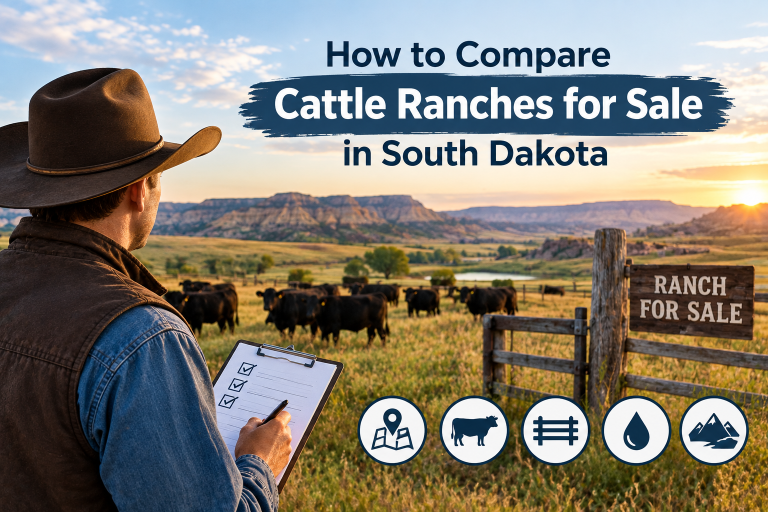
South Dakota’s wide-open range, deep grass, and reliable water sources have made it one of the most sought-after states for ranchers looking to expand or start fresh. But not every property listed as one of the many cattle ranches for sale in South Dakota is built the same way. Acreage numbers alone can be misleading, and a ranch that looks impressive on paper may fall short once you account for water rights, soil quality, or herd carrying capacity. At Larson Ranch LLC, we’ve spent generations working South Dakota land, and we know exactly what separates a genuinely productive operation from a property that only looks good in photos.
This guide breaks down the practical factors that matter most when comparing ranch properties, so you can make a confident, informed decision before you sign anything.
Start With Land Quality, Not Just Acreage
The first mistake many buyers make is comparing ranches purely by total acres. A 2,000-acre parcel with poor forage and rocky terrain can carry far fewer animal units than a well-managed 1,200-acre ranch with strong native grass. Before you compare price per acre, ask about:
- Grazing capacity, or how many animal units the land supports per season
- Soil type and forage quality across pastures
- Terrain features that affect usable grazing space
- History of overgrazing or drought stress on the property
Understanding these details early prevents costly surprises after closing. Learn more about how we manage grazing and herd health on our premium cattle page.
Water Access and Infrastructure
Water is the single most important resource on any South Dakota ranch. Reliable access, whether from wells, dams, springs, or river frontage, directly affects how much of the property you can actually use for grazing. When touring a ranch, verify well depth, pump condition, and whether water rights are transferable with the sale. Also check existing infrastructure: fencing condition, corral setup, handling facilities, and barn or shelter availability. Rebuilding fencing or installing new water systems can add tens of thousands of dollars to your first-year costs, so factor this into your comparison rather than treating it as a minor detail.
Comparing Location and Regional Advantages
South Dakota isn’t uniform. Ranch productivity, climate patterns, and market access vary significantly by region. Our own operation sits in the White River region, an area known for strong grass and dependable ranching conditions. You can review our location details to see how regional positioning affects land value and usability.
| Factor | Why It Matters |
|---|---|
| Distance to livestock markets | Reduces transport costs and stress on cattle |
| Proximity to veterinary services | Faster response for herd health issues |
| Regional rainfall averages | Impacts forage reliability year to year |
| Road and access conditions | Affects equipment delivery and daily operations |
Herd Quality and Cattle History
If a ranch is being sold with existing cattle, the quality of that herd should factor heavily into your decision. Ask for breeding records, health documentation, and vaccination history. A ranch offering guaranteed bred heifers or a well-documented bull lineage gives you a head start rather than a rebuilding project.
Understand the Full Cost Picture
The listing price is only one part of the equation. Property taxes, fencing repair, equipment needs, and ongoing maintenance all shape the real cost of ownership. Many first-time buyers underestimate these expenses when comparing cattle ranches for sale in South Dakota, focusing only on the sticker price rather than the operating budget required to run the property successfully. Our breakdown on the real cost of owning cattle ranches in South Dakota walks through expenses that often get overlooked during the buying process.
Auction and Purchase Process Considerations
Some ranch and cattle transactions happen through auction rather than a straightforward private sale. If you’re comparing properties that include auction-based cattle purchases, it helps to understand how the bidding process works, what documentation is required, and how to avoid overpaying in a competitive setting.
Comparison Checklist
Use the table below as a quick side-by-side reference when evaluating multiple properties.
| Category | What to Verify |
|---|---|
| Land & Forage | Grazing capacity, soil quality, drought history |
| Water | Well depth, water rights, backup sources |
| Infrastructure | Fencing, corrals, barns, equipment included |
| Herd (if applicable) | Health records, breeding history, vaccination status |
| Location | Market access, vet services, rainfall patterns |
| Total Cost | Taxes, repairs, ongoing operating expenses |
Why Buyers Compare Larson Ranch LLC?
Larson Ranch LLC has built its reputation on transparency and generations of hands-on ranching experience in South Dakota’s White River region. From our documented herd history detailed on our about us page to our long-standing family operation covered in our history, every property and animal we offer comes with a track record buyers can verify. Whether you’re comparing cattle ranches for sale in South Dakota for the first time or expanding an existing operation, we encourage you to ask the same detailed questions of us that you would ask any seller.
Frequently Asked Questions
1. What is the most important factor when comparing ranches for sale?
Grazing capacity and water access typically matter more than raw acreage, since they determine how many cattle the land can realistically support.
2. How do I verify water rights on a South Dakota ranch?
Request documentation from the seller and confirm with the South Dakota Department of Agriculture and Natural Resources that rights are transferable with the sale.
3. Should I buy a ranch with existing cattle or start with an empty property?
Buying with an established, well-documented herd can save time and money, but only if health and breeding records are verified beforehand.
4. How much does fencing and infrastructure repair typically add to costs?
Costs vary widely by property condition, but buyers should budget for potential fencing, water system, and corral repairs during their first year.
5. Is the White River region a good area to buy ranch land?
Yes, the region is known for reliable grass, dependable water access, and strong ranching conditions, making it a popular choice among buyers.
6. Does Larson Ranch LLC offer guidance to first-time ranch buyers?
Yes, our team works directly with buyers to walk through property details, herd records, and regional considerations before purchase.
Contact Us
If you’re ready to compare properties or want a firsthand walkthrough of what’s currently available, reach out to our team directly.
Phone: 605-842-0260