

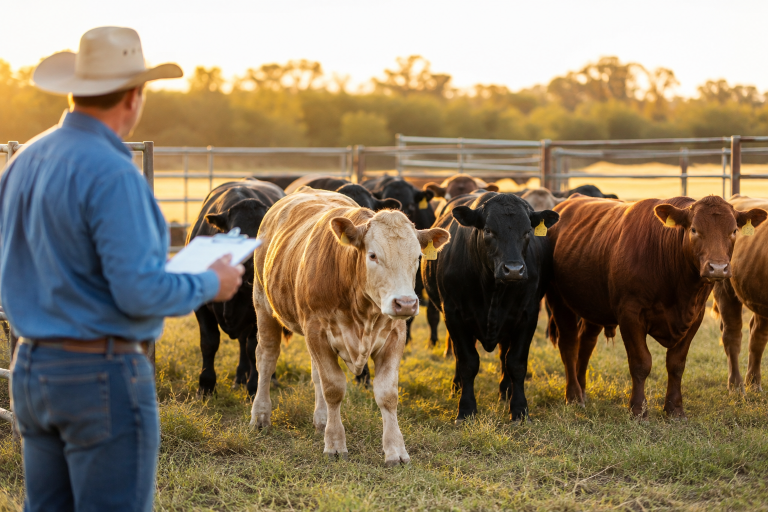
Building a productive herd starts long before calving season — it starts with the animals you choose to bring onto your operation. At Larson Ranch LLC in Hamill, South Dakota, cattle selection is treated as the foundation of long-term herd performance, not an afterthought. Buyers who understand what to look for when selecting cattle in South Dakota consistently see stronger calving rates, better weight gains, and healthier margins over time.
Why Cattle Selection Matters More Than Herd Size?
Many first-time buyers assume a bigger herd automatically means bigger profits. In reality, a smaller herd of well-selected, genetically sound cattle will almost always outperform a larger herd built without a clear selection strategy. Cattle selection in South Dakota requires factoring in regional climate, grass quality, and terrain — traits that work well in a feedlot setting don’t always translate to open range conditions common across the White River region.
Key Traits to Evaluate Before You Buy
Before adding animals to your herd, evaluate these core traits:
- Structural soundness — strong legs, feet, and a level topline reduce injury risk on rough terrain
- Calving ease — especially important for heifers entering their first breeding season
- Disposition — calmer cattle are easier to handle and tend to convert feed more efficiently
- Growth rate — steady, consistent gains matter more than rapid early growth
- Maternal instinct — cows that protect and nurse calves well directly boost survival rates
- Fertility history — proven breeders reduce the risk of open cows at pregnancy check
Matching Genetics to South Dakota Conditions
Cattle that thrive in humid, lowland regions don’t always perform the same way on South Dakota’s prairie grasslands. Genetics play a major role in how well an animal handles temperature swings, drought stress, and long grazing distances. Ranchers focused on cattle selection should prioritize bloodlines with a proven track record in similar climates, rather than choosing based on show-ring appearance alone.
Understanding EPDs and What They Actually Tell You
Expected Progeny Differences (EPDs) give buyers a data-backed way to predict how a bull or cow’s offspring will perform. Below is a simplified breakdown of commonly used EPDs and what they measure:
| EPD Category | What It Measures | Why It Matters |
|---|---|---|
| Birth Weight | Expected calf birth weight | Lower values reduce calving difficulty |
| Weaning Weight | Growth by weaning age | Indicates early growth potential |
| Yearling Weight | Growth by one year | Predicts feedlot or grazing performance |
| Milk | Maternal milk production | Impacts calf weaning weight |
| Calving Ease Direct | Ease of unassisted calving | Critical for first-calf heifers |
Understanding these numbers before a bull sale or private treaty purchase helps buyers avoid costly surprises down the road.
The Role of Health History in Cattle Selection
A strong vaccination and health record should carry as much weight as physical appearance. Cattle with documented health protocols are less likely to introduce disease into an existing herd, and they typically transition to a new environment with fewer setbacks. Asking for complete health records is a standard part of due diligence for serious buyers.
How Selection Impacts Long-Term Herd Performance?
Every selection decision compounds over time. A cow with poor maternal instincts may wean lighter calves year after year, while a structurally unsound bull can pass on soundness issues to an entire calf crop. Ranchers who commit to disciplined cattle selection typically see measurable improvements within two to three breeding cycles — including higher conception rates, more uniform calf crops, and reduced veterinary costs.
Working with an Experienced South Dakota Ranch
Buyers who are new to the region often benefit from working directly with an established operation that understands local conditions. Larson Ranch LLC has spent years refining herd genetics suited specifically to South Dakota’s grazing environment, and the team is available to walk buyers through available cattle, bloodlines, and health documentation before any purchase decision is made.
Frequently Asked Questions:
1. What is the most important trait to look for in cattle selection?
There isn’t a single “most important” trait — structural soundness, calving ease, and fertility history should all be weighed together based on your herd goals.
2. How do EPDs help with cattle selection?
EPDs provide a data-driven prediction of how an animal’s offspring will perform, helping buyers avoid guesswork based on appearance alone.
3. Should I prioritize genetics over health history?
Both matter equally. Strong genetics won’t offset a poor health record, and vice versa.
4. How long does it take to see results from better cattle selection?
Most ranchers notice measurable improvements within two to three breeding cycles.
5. Is cattle selection different for South Dakota ranches compared to other regions?
Yes. Climate, terrain, and grazing conditions in South Dakota require cattle genetics suited to open range and temperature extremes.
6. Can Larson Ranch LLC help first-time buyers with cattle selection?
Yes, the team at Larson Ranch LLC works directly with buyers to review bloodlines, health records, and herd goals before purchase.
Get in Touch
If you’re ready to strengthen your herd with cattle selected specifically for South Dakota conditions, Larson Ranch LLC is here to help guide the process from start to finish. Reach out to discuss available cattle, bloodlines, and herd-building strategy.
Contact Info
Phone: 605-842-0260